Cats Against Authoritarianism

au·thor·i·tar·i·an·ism

A system of government in which the ruler has unlimited power
of, relating to, or favoring a concentration of power in a leader or an elite not constitutionally responsible to the people. – Merriam Webster

Yeah, we’re not a fan. Hiss.

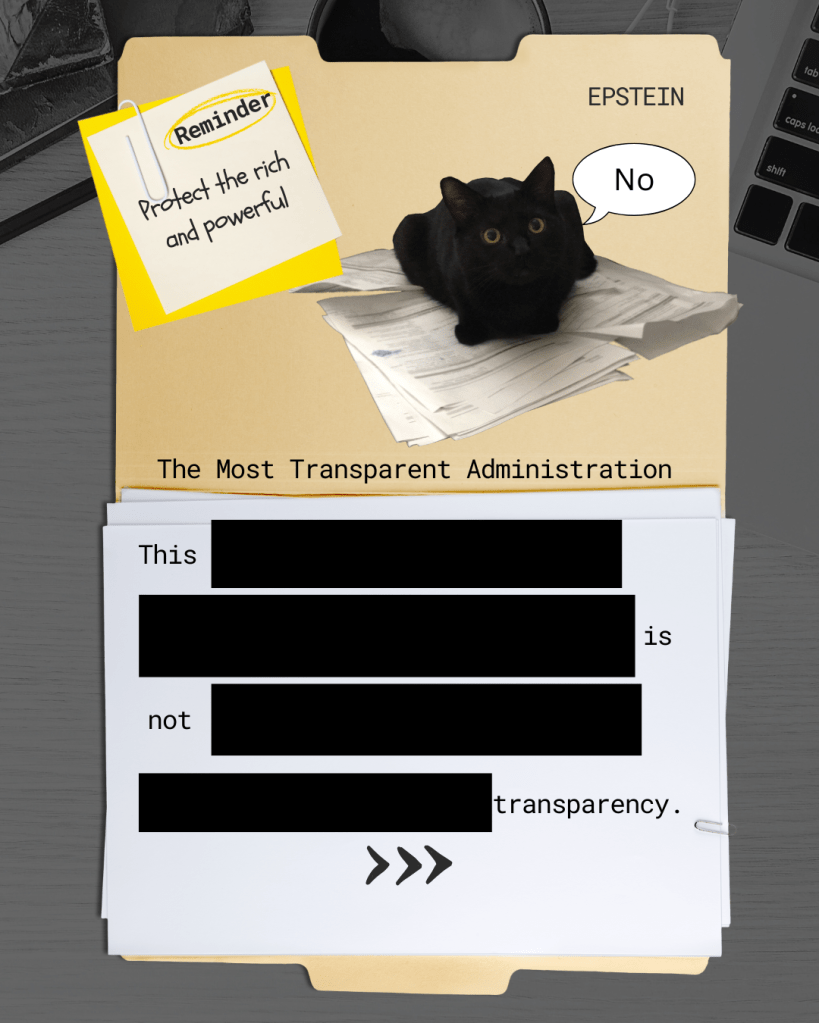
  • Survivors Deserve Justice, Not Redactions That Protect the Powerful

    In the fight for justice, survivors of abuse should always come first. Their voices deserve to be heard clearly. When authoritarian regimes release information, it comes heavily redacted with key details blacked out to protect the powerful rather to than empower survivors.

    Redactions Are Not Transparency

    Heavily redacted documents are faux disclosure. They give the appearance of openness, while concealing the truth. Names, dates, and crucial facts are erased or obfuscated, preventing the public, and the survivors from understanding the full scope of abuses and who enabled them. This is not transparency. It’s a tool to maintain power structures, and a barrier to real accountability.

    Protecting the Powerful Silences Survivors

    When redactions hide evidence or identities, they protect those who may be responsible or complicit. This leaves survivors isolated, their stories incomplete, and their pursuit of justice stalled. Survivors deserve more than partial truths or censored records. They deserve to see their abusers held accountable, and to have their experiences validated, not erased.

    Real Justice Requires Full Disclosure

    Justice is impossible without truth. Real transparency means releasing information fully and responsibly, with only necessary and clearly justified exceptions. It means independent oversight to prevent abuse of secrecy. It means centering survivors, not the powerful. We must reject the hollow promise of redacted “transparency” that serves those in power at the expense of survivors.
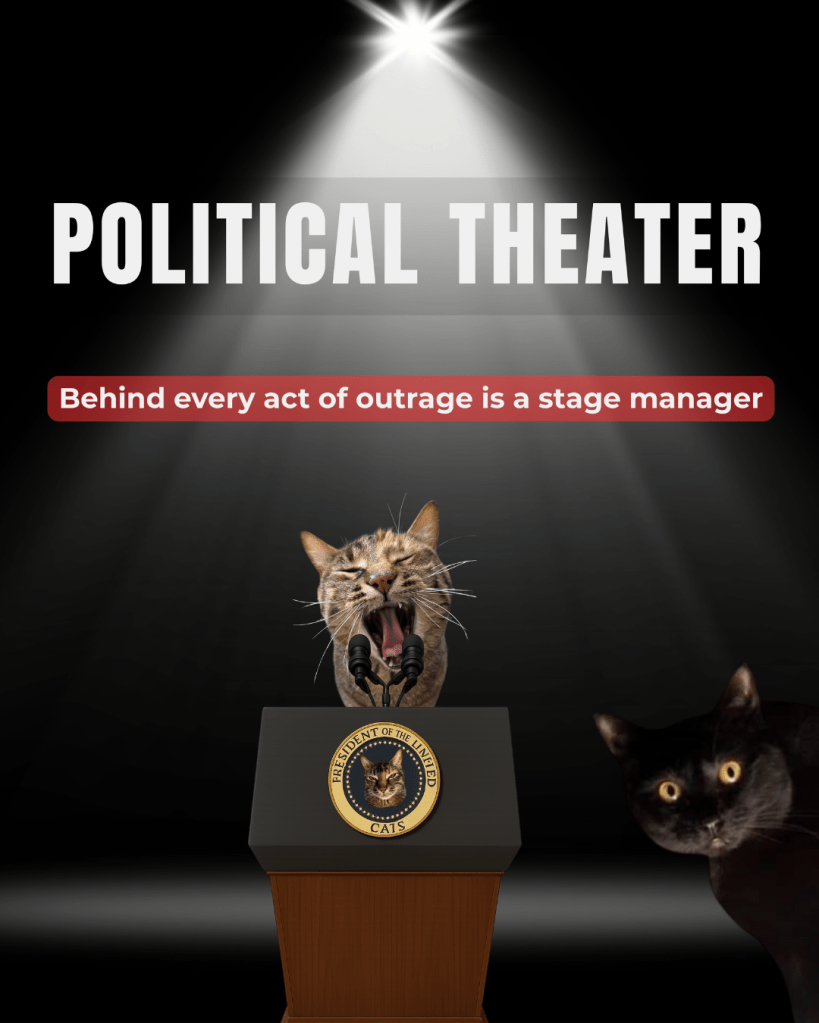

  • Authoritarian Political Theater: The Erratic Star, the Stage Manager, and the Bumbling Loyalists

    In an authoritarian regime, the leader is the star, but not always the disciplined kind. Some are erratic, impulsive, and unpredictable, grabbing the spotlight with sudden proclamations and dramatic gestures. Every appearance feels improvised, thrilling supporters and keeping their critics off balance.

    Behind the scenes is the stage manager: the hidden architect of messaging, timing, and optics. Their job is to make the leader’s chaos look intentional. The stage manager channels outrage at any opposition. Criticism is amplified as a moral attack, rallying supporters while disorienting opposition. Outrage itself becomes a tool of control. The stage manager, whether the leader recognizes it or not, is the puppet master.

    Supporting this performance is a cadre of loyalist. Devoted, but often intentionally inexperienced and, frankly, bumbling. Loyalty is seen as more important than experience. They stumble over talking points, fumble public appearances, and misstep on camera. Each error adds chaos. The stage manager absorbs it, turning mistakes into spectacle and maintaining the illusion of unity and control.

    Flags, podiums, seals, and choreographed gestures amplify the theater. Crises, scandals, or missteps are improvised into performance, reinforcing authority rather than undermining it.

    Authoritarian theater is a high-stakes production: an impulsive star, sycophantic loyalists, and a stage manager wielding outrage. The drama, chaos, and fury are not accidental, they are the curated tools of domination, keeping their audience captivated and their power intact.

    Political theater thrives on emotion, drama, and optics. Resist being swept up by your outrage (I know, easier said than done). Pay attention to actual policies, legislative actions, and measurable outcomes rather than flashy messaging or performative gestures. Before reacting to emotional or viral content, ask yourself: Does this change anything practically, or is it just for show? Focus your energy on actions that influence real outcomes. When discussing politics, emphasize policy, evidence, and impact over outrage or personality. Encourage others to do the same. Elevating substance weakens the pull of the spectacle.

  • Polarize to Paralyze: How Authoritarian Leaders Exploit Conflict

    Authoritarian leaders blame political opponents and stigmatize them as dangerous, immoral, or existential threats. They avoid shared responsibility and portray their opponents as not just having opposing views, but as fundamentally bad or violent. They create martyrs or symbolic figures to galvanize their base and threaten punitive responses that emphasize state power and justice that’s aligned with their own beliefs. Authoritarian leaders don’t cultivate unity, rather they use rhetoric to heighten fear and grievance including:

    • Amplifying differences (political, cultural, religious, racial, etc.) to make groups feel further apart.
    • Using inflammatory language that pits “us” against “them.”
    • Exaggerating threats or problems caused by another group.
    • Encouraging suspicion or distrust where cooperation or common ground might otherwise exist.
    • Exploiting emotions like fear, anger, or pride to keep people polarized.

    Those in the middle hold the power to tip the balance. Bridging the middle means listening, meeting people where they are, and focusing on common ground. Small steps of understanding can ripple outward, reducing polarization one conversation at a time.

  • Admire. Obey. Defend. The Cult of Personality

    A cult of personality happens when a public figure (usually a political leader) builds an image of themselves that is larger-than-life. Their followers start to treat that image as unquestionable and central to their own identity. It’s not literally a “cult” in the religious sense, but it shares some similarities in the way people admire, obey, and defend the leader, often blindly.

    While this picture is one example, where the leader’s image or ideology becomes part of a followers clothing, slogans, rituals, and social norms, there are other ways that cult of personality is exhibited:

    • The leader is portrayed as uniquely strong, brilliant, or chosen, often exaggerating personal achievements.
    • Their face, name, and slogans dominate public life in rallies, on TV, in social media, and on merchandise.
    • Anyone who challenges the leader isn’t just a political opponent, but an “enemy of the people.”
    • Personal Loyalty is greater than Institutions. Citizens and officials are expected to pledge loyalty to the leader, not the constitution, laws, or democratic values.
    • Followers feel a personal connection to the leader, almost like devotion to a parent or deity. Identity is tied to the leader’s persona, making criticism of them feel like betrayal.
    • Questioning or criticizing the leader can be seen as disloyal, immoral, or even criminal.
    • Blind Defense of the Leader. Followers often defend everything the leader does, even actions that contradict logic or ethics.

  • Authoritarianism vs. Democracy: The Military’s Duty

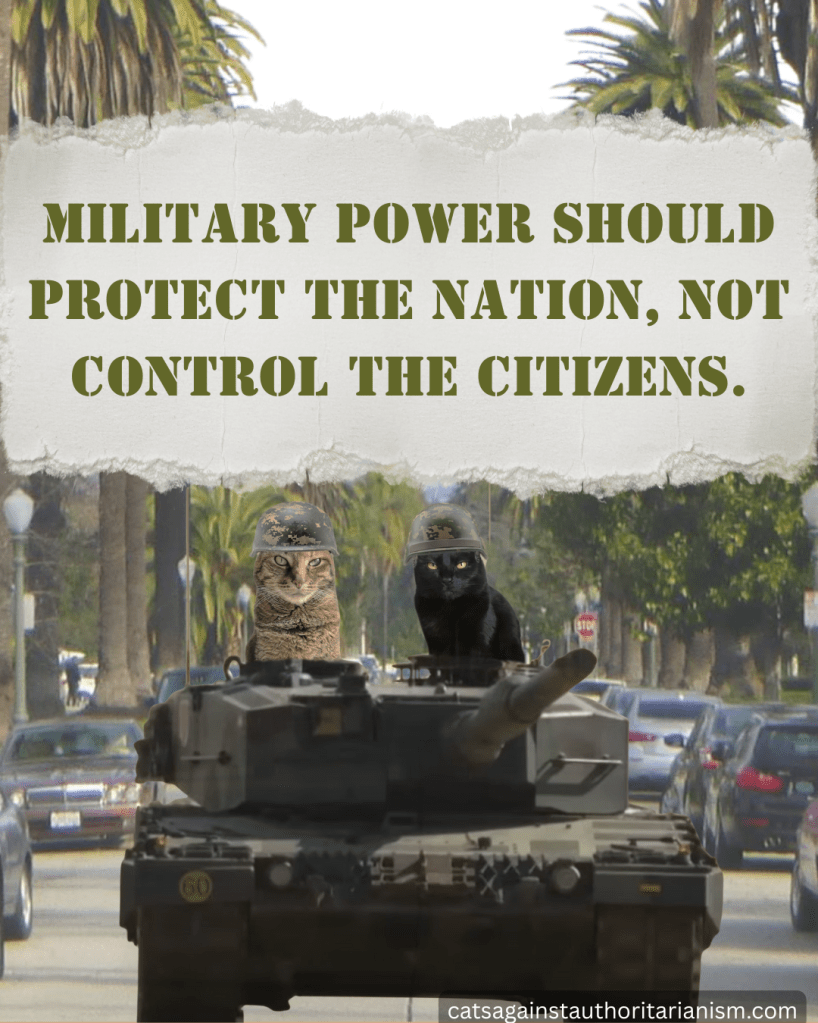
    In healthy democracies, the military protects the nation, not the ruling party.

    Authoritarian leaders cross a dangerous line when they deploy soldiers, federal agents, or heavily armed forces against their own people. Whether it’s breaking up protests, intimidation, or patrolling communities under the guise of “safety”, the goal is the same: to silence dissent and make citizens fear their own government. 

    When a government turns its weapons inward, it stops serving the people, and starts ruling over them.

    Citizens can resist this tactic (and authoritarianism in general) through nonviolent, collective action that makes repression harder to sustain. Some key ways:

    • Document and Expose – film, photograph, and share incidents of military or police repression; visibility reduces impunity.
    • Peaceful Mass Mobilization – large, nonviolent protests make it harder for leaders to justify crackdowns.
    • Legal Challenges – support lawsuits and watchdog groups that push back against unlawful use of force.
    • Independent Media Support – follow and fund journalists who report honestly on abuses.
    • Solidarity Networks – communities protecting each other, offering safe spaces, and ensuring protesters aren’t isolated.
    • Civic Pressure – voting, lobbying, and demanding lawmakers set limits on domestic military deployment, or follow existing laws.
    • International Attention – connecting with human rights groups abroad to raise costs for authoritarian leaders. The international spotlight shines harshly, so leaders can’t hide human rights abuses.
    • Build Alliances – unite labor unions, student groups, religious organizations, and community leaders; broad coalitions are harder to crush.
    • Protect the Vulnerable – organize rapid response teams to monitor at-risk communities and offer support.
    • Decentralize Organization – avoid single leaders; horizontal networks make movements harder to dismantle.
    • Culture & Art – satire, street art, music, and symbols can spread resistance even under censorship.
    • Economic Pressure – boycotts, strikes, and divestment campaigns weaken authoritarian regimes’ resources.
    • Digital Security – use encrypted messaging, VPNs, and digital hygiene to stay safe when organizing.
    • Education – teach others how authoritarian tactics work; awareness reduces fear and manipulation. There’s a playbook and leaders are following it. Use that to stay informed and learn from history.
    • Stay Nonviolent – history shows sustained, disciplined nonviolent movements are twice as effective as violent resistance in defeating authoritarian regimes.

    The key: don’t fight violence with violence. Authoritarian leaders want citizens to lash out so they can justify more force. Nonviolent resistance, organization, and persistence are historically the most effective counters.

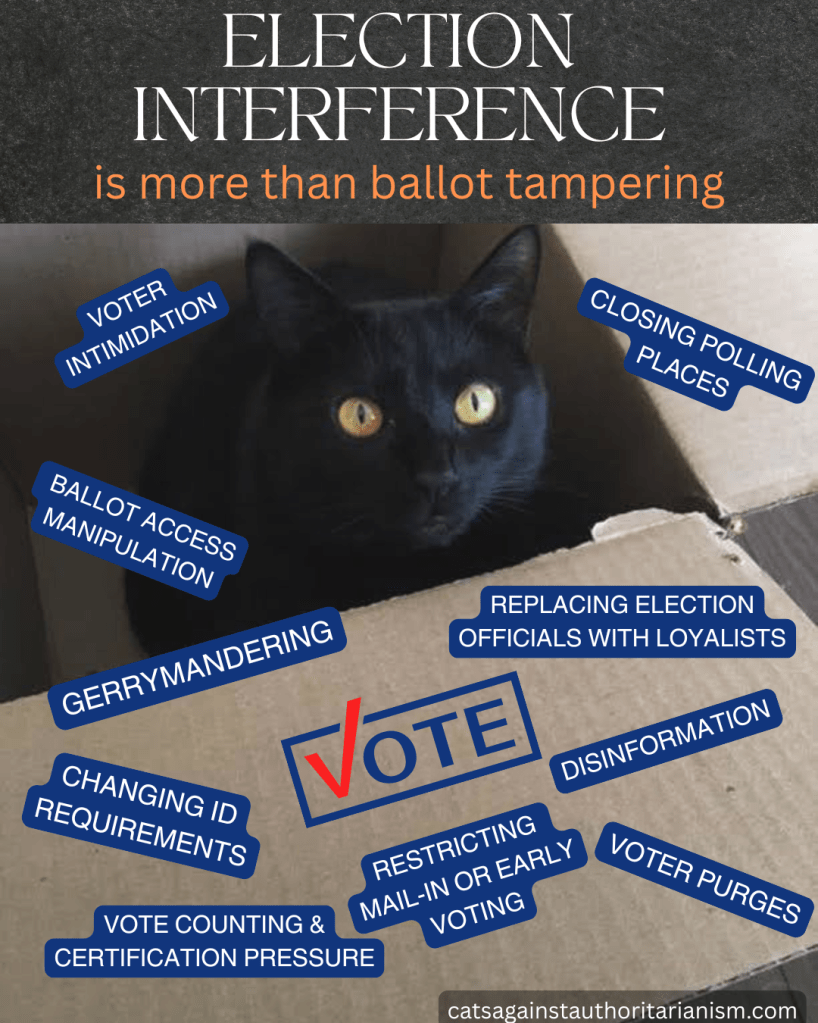
  • Democracy Only Works if Elections are Free and Fair

    Authoritarian leaders don’t always cancel elections, they rig them quietly. Here’s how:

    • Gerrymandering – drawing districts so politicians choose voters instead of voters choosing them.
    • Changing ID Laws – narrowing what IDs “count” to shut out students, seniors, and low-income voters.
    • Voter Intimidation – armed groups, surveillance, or police presence at polling sites.
    • Closing Polling Places – especially in densely populated or opposition-leaning areas, forcing hours-long lines.
    • Disinformation – lies about voting dates, rules, or locations.
    • Purging Voter Rolls – removing eligible voters under the guise of “cleaning” records.
    • Restricting Mail & Early Voting – cutting options that many rely on to cast a ballot.
    • Controlling Election Officials – replacing neutral administrators with loyalists.
    • Ballot Access Manipulation – making it harder for challengers to qualify or compete.
    • Certification Pressure – delaying or refusing to certify results that don’t favor those in power.

    Each tactic chips away at your voice until elections are only free in name, not in practice. Free and fair elections aren’t just a process, they’re the foundation of democracy.

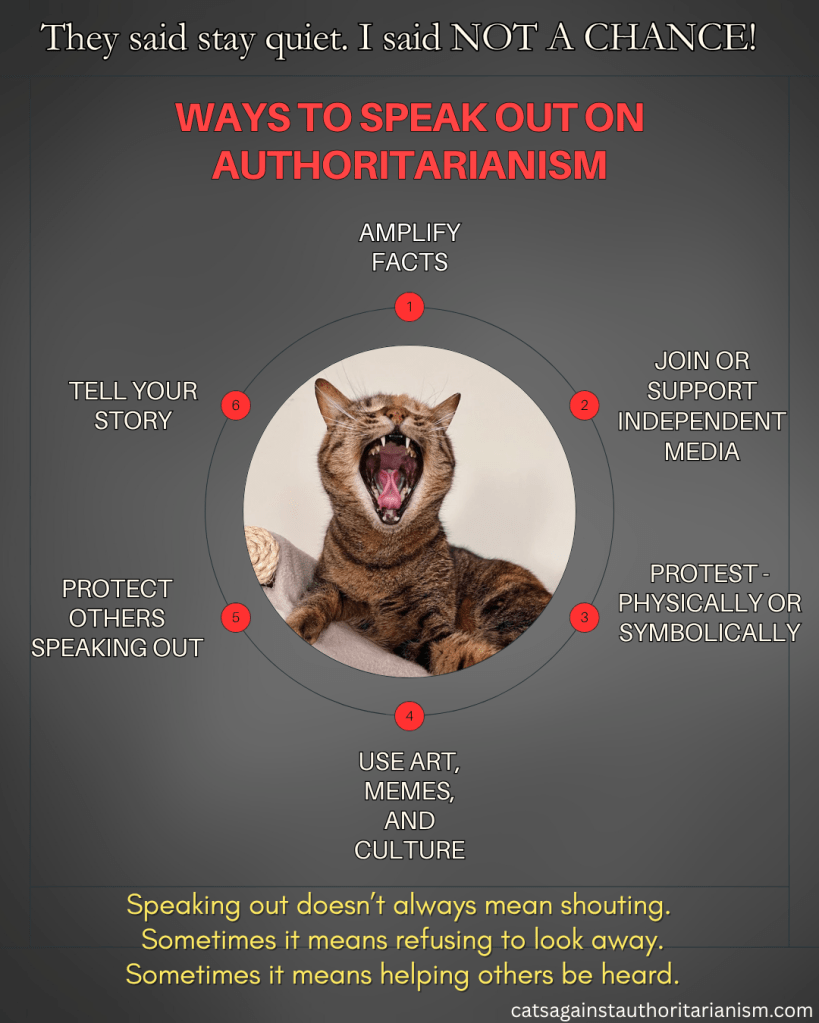
  • AMPLIFY FACTS. DROWN OUT LIES.

    They call it fake news. They smear the press. They “flood the zone” with noise until truth drowns in confusion.

    That’s not just chaos, it’s control.

    Speaking out is the antidote. Whether you roar, write, amplify, or resist in small ways, every act of truth-telling matters. When they want silence and compliance, making noise is taking back power.
    Don’t stay quiet. Get loud!

  • Authoritarianism Thrives on Exhaustion. Protect your Mental Health

    Authoritarian regimes rely on constant crises, disinformation, surveillance, and fear to wear people down. When people are tired, anxious, and overworked, they’re less likely to resist, organize, or even think critically.

    Rest disrupts the authoritarian playbook. It restores the clarity and energy needed to observe, question, and resist.

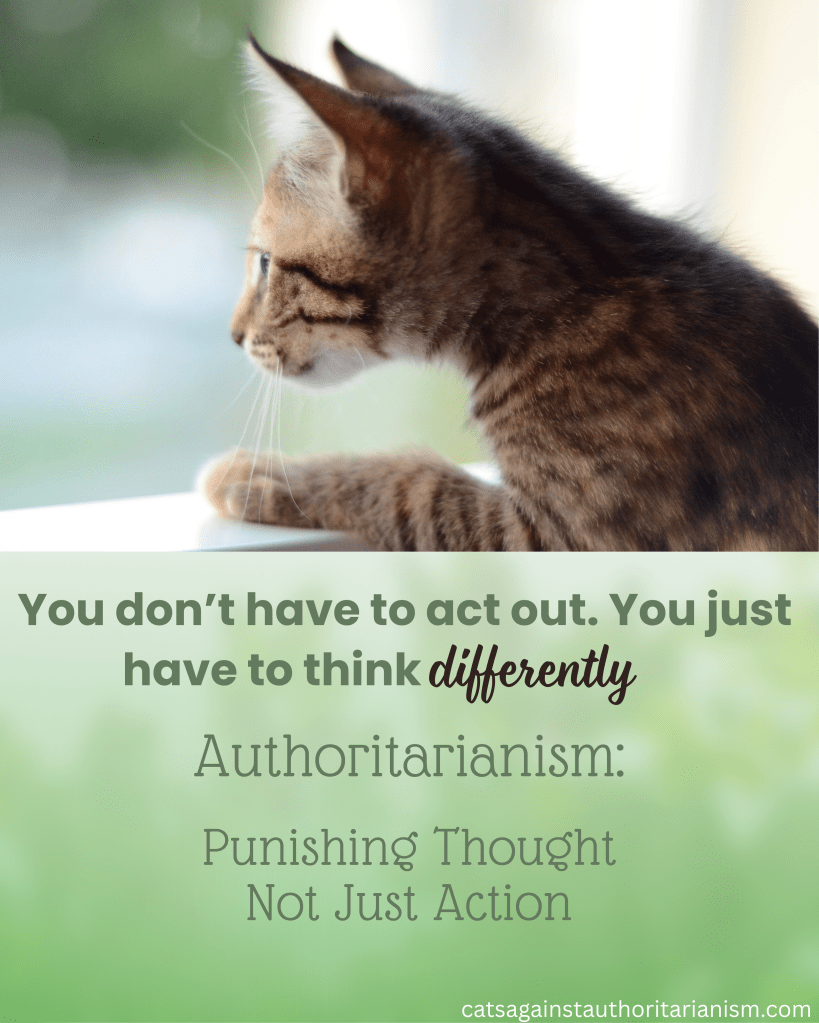
  • Punishing Thought, Not Just Action

    In authoritarian regimes, expressing doubt, raising questions, or imagining alternatives is punished.

    Historically, look to Russia or Germany where telling a joke, reading a banned book, or not reporting on members of your community can get you imprisoned (or worse). In recent years, political figures have called journalists “enemies of the people,” and their own citizens as “enemies within” and sought to criminalize protest or label ideological opponents as threats to “national security”.

    Moves to criminalize speech, control educational content, or punish thought under “anti-woke” or “anti-extremism” laws echo authoritarian tactics. Sound familiar?

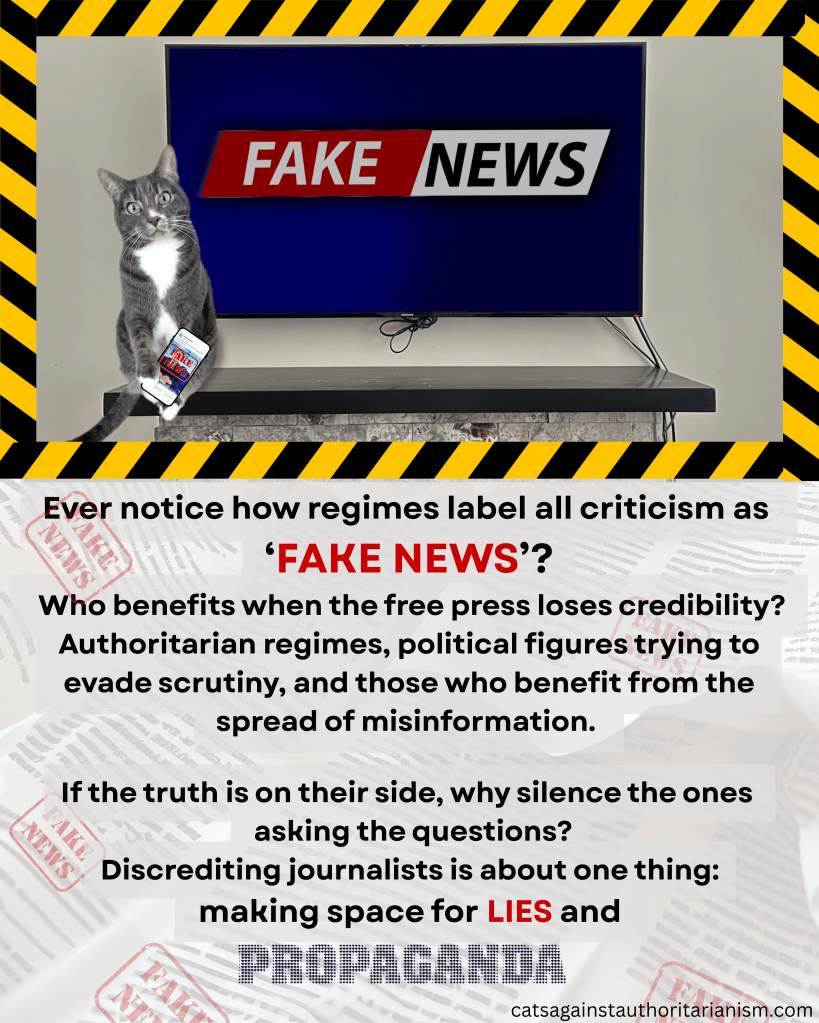
  • “Fake News” as a Smokescreen

    Authoritarians don’t just lie, they make truth untrustworthy.

    They scream “fake news” at anything critical.
    They smear journalists as enemies or foreign agents.
    They flood the public with noise and contradiction until people give up asking what’s real.

    They flood the public sphere with conflicting narratives. Contradictory statements, sensational distractions, and conspiracies blur the lines between fact and fiction. The result? Exhaustion, confusion, apathy. This isn’t about correcting the record, it’s about destroying public trust, so the only voice left standing is theirs.

    If no one believes the press, the regime can say anything and get away with everything.